Refinishing a Heart Pine Floor That Lost Its Amber Color — Roswell, GA
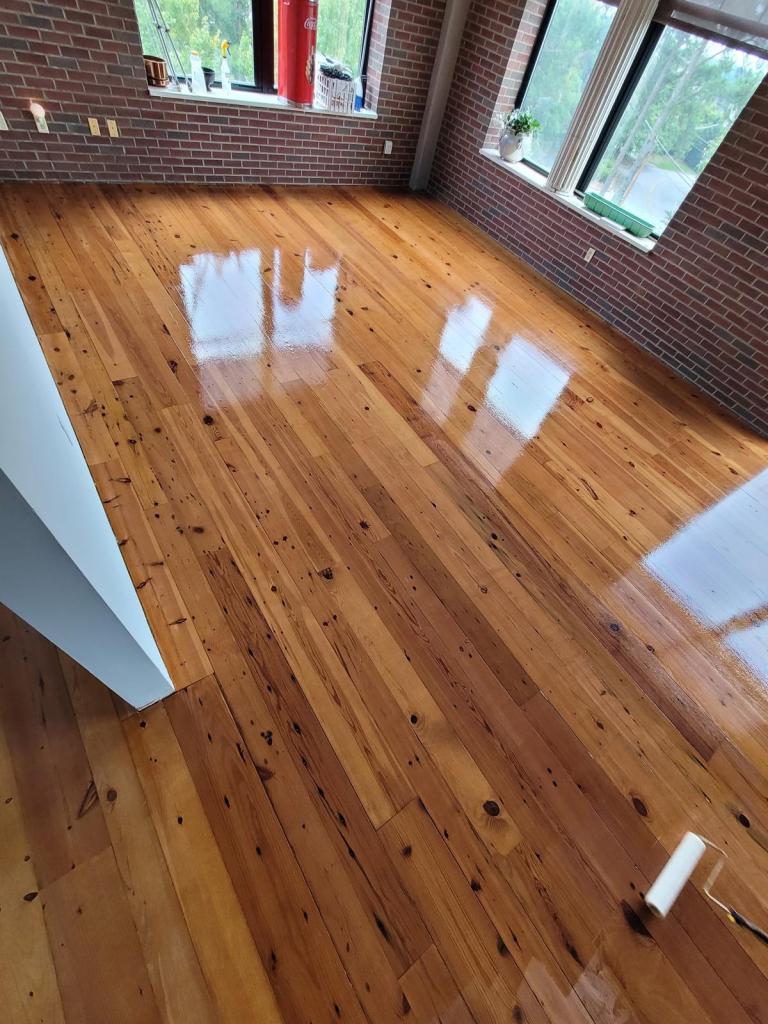
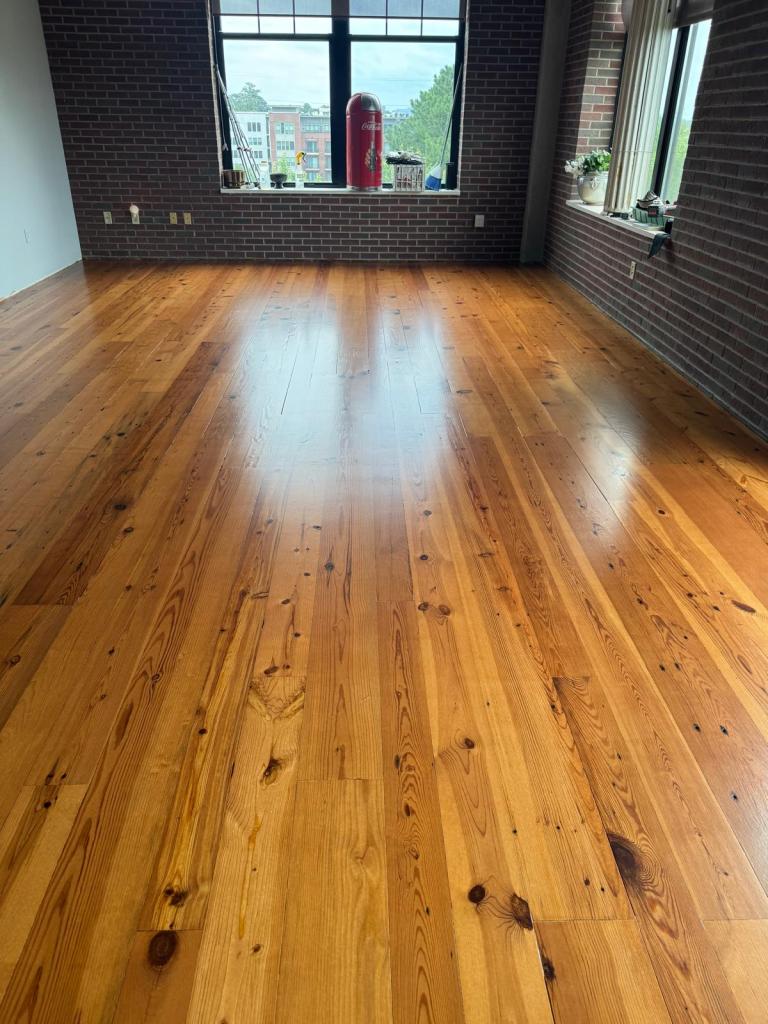
Classy Flooring ATL refinished approximately 1,250 square feet of heart pine flooring in a Roswell, Georgia condominium in November 2025, covering two bedrooms, the living room, the kitchen, and the entry hallway. The floor had been refinished shortly before and came back pale, without the deep amber tone it had carried before that work, and the homeowner wanted that ambered character back. Color was rebuilt through a dewaxed shellac wash coat and a custom DuraSeal Quick Coat blend of Nutmeg and Chestnut, selected by the homeowner from six samples laid on the floor, then held under Loba WS EasyPrime with two coats of Loba WS 2K Duo in satin.
Project Overview
Three things defined this project: sanding the floor back to raw wood, flattening a surface left uneven by the previous refinish, and rebuilding the color the floor had carried before.
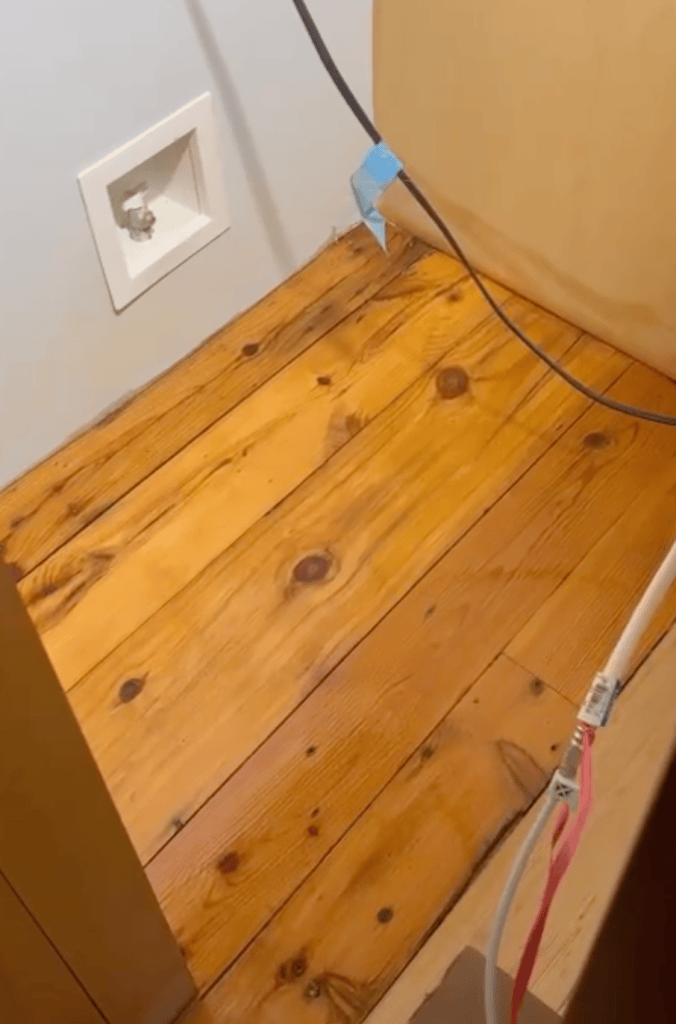
The reference for that color was still on the floor. Pine beneath the refrigerator had never been exposed to light and had not been touched by the previous refinish, so it held the original amber. The homeowner could select against her own wood, under her own light.
This Roswell project is one of Classy Flooring ATL’s documented hardwood refinishing projects — color restoration on old pine, pre-stain preparation, and surface correction. See the full range of our work on our Our Work page.
Project type: Hardwood floor refinishing
Location: Condominium, Roswell, Georgia
Scope: Approximately 1,250 square feet — two bedrooms, living room, kitchen, entry hallway
Crew: Two, Classy Flooring ATL in-house
Duration: Four working days
Year: 2025
Starting Condition
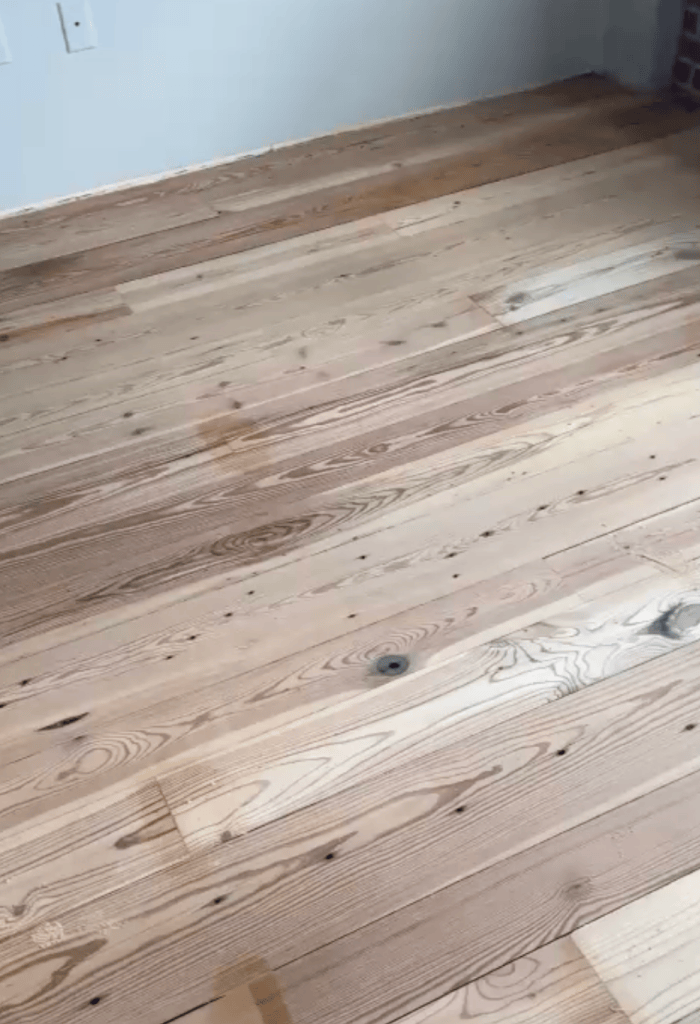
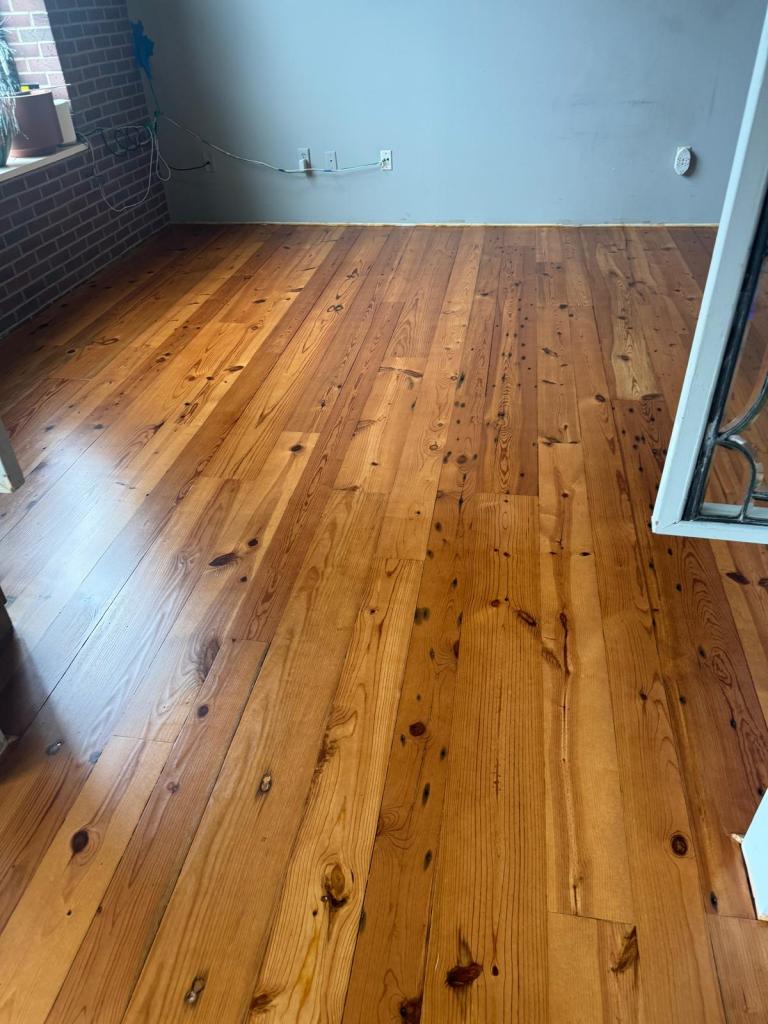
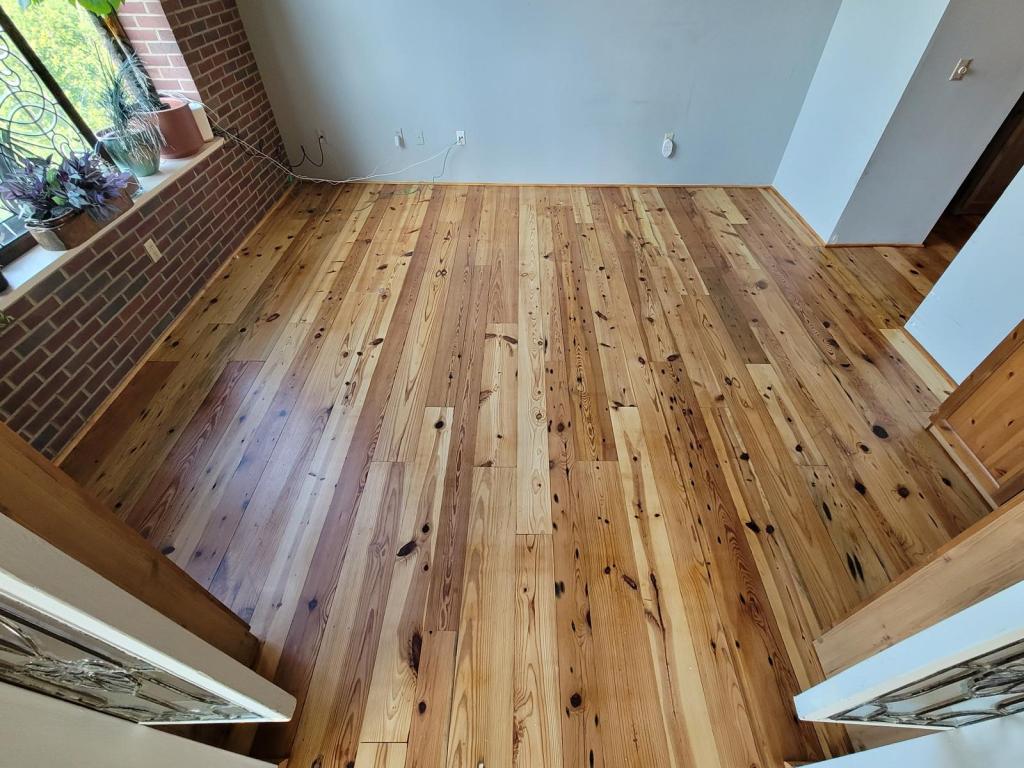
Color. The floor carried a waterborne finish and read pale, with no amber in it.
Surface. The previous refinish had left the floor sanded unevenly. Photographed in raking light, which is how flatness is read on a wood floor, reflections across the boards scattered and broke along the run.
Board variation. Several boards read lighter and flatter than the surrounding material, visible under the old finish and again once the floor came back to raw wood.
The floor carried a clear waterborne finish and read pale, with no amber in it.
Why Does a Pine Floor Lose Its Amber Color After Refinishing?
Because sanding removes both sources of that amber at once, and what goes back on determines whether it returns.
Two things build the tone on an old pine floor. The wood itself darkens over decades. An oil-based finish ambers as it ages, and that shift compounds on top of the wood beneath it. Sanding takes off the finish and the aged surface layer together, leaving pine at its raw color, which is pale.
What happens next depends on the specific products chosen. Some clear finishes are formulated to stay clear and hold the wood close to its freshly sanded appearance. Others are made to amber, including waterborne polyurethanes built to give the warm look of an oil-based finish. A clear, non-ambering finish over raw pine produces a pale floor, and on a light floor or a cool-toned stain that is exactly the intended result.
This floor came back pale. The homeowner wanted the warmth it had before, so the color had to be put back deliberately.
Color stays recoverable. The tone lives in the finish and the surface layer of the wood, so a floor sanded to raw wood can go in any direction the species allows, including back toward the amber it carried before.
How This Project Was Executed
- Evaluated the floor, the surface condition, and the existing finish
- Moved the refrigerator and identified the unexposed original color beneath it as the reference
- Opened the floor at 40 grit, then 60 and 80 with the belt machine; edger at the perimeter; corners scraped by hand
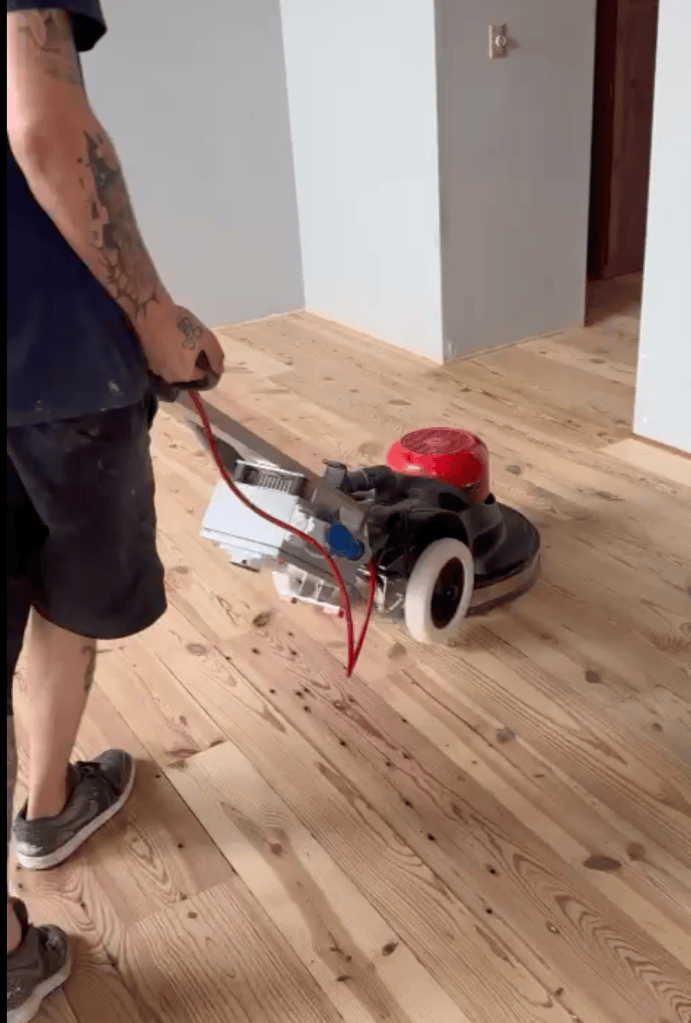
- Took the finishing passes at 100 and 120 grit with the FG Floortec Discus planetary sander, flattening the surface across the full field
- Laid six stain samples directly on the sanded floor in bands separated by bare pine
- Presented the samples to the homeowner alongside the original color preserved under the refrigerator
- Applied a dewaxed shellac wash coat — Zinsser SealCoat thinned six parts denatured alcohol to one part sealer
- Stained in DuraSeal Quick Coat, custom blend of two parts Nutmeg to one part Chestnut
- Applied one coat of Loba WS EasyPrime sealer
- Applied two coats of Loba WS 2K Duo in satin
Finding the Color the Floor Used to Carry
Rebuilding a floor’s warmth starts with knowing what that warmth actually looked like. Household lighting and camera processing both shift color, so a photograph gives a direction. A stain chart shows a color on a different piece of wood.
This floor offered something better. The refrigerator had stood in one position for years, shielding the pine underneath from light and from the previous refinish. Moving it exposed the floor’s earlier appearance intact — aged wood under its old finish, preserved exactly as the rest of the floor had looked before it was sanded.
That put the floor as it was directly beside the floor as it had become, in the same wood and the same room.
Sanding: Correcting an Uneven Surface
Sanding carried two jobs on this floor. Remove the existing finish, and flatten the surface.
The belt machine cut at 40, 60, and 80 grit, with an edger at the perimeter and hand scraping in the corners. Finishing passes went to the FG Floortec Discus planetary sander at 100 and 120 grit.
Surface correction builds across the whole sequence. The belt passes remove material and take out the bulk of the variation; the planetary passes then work across the board direction rather than along it, refining the surface and reducing the directional marks left by the earlier cuts.
That 120-grit finish also sets up the stain. It leaves the pine open enough to absorb color evenly and refined enough to hold it consistently across old boards.
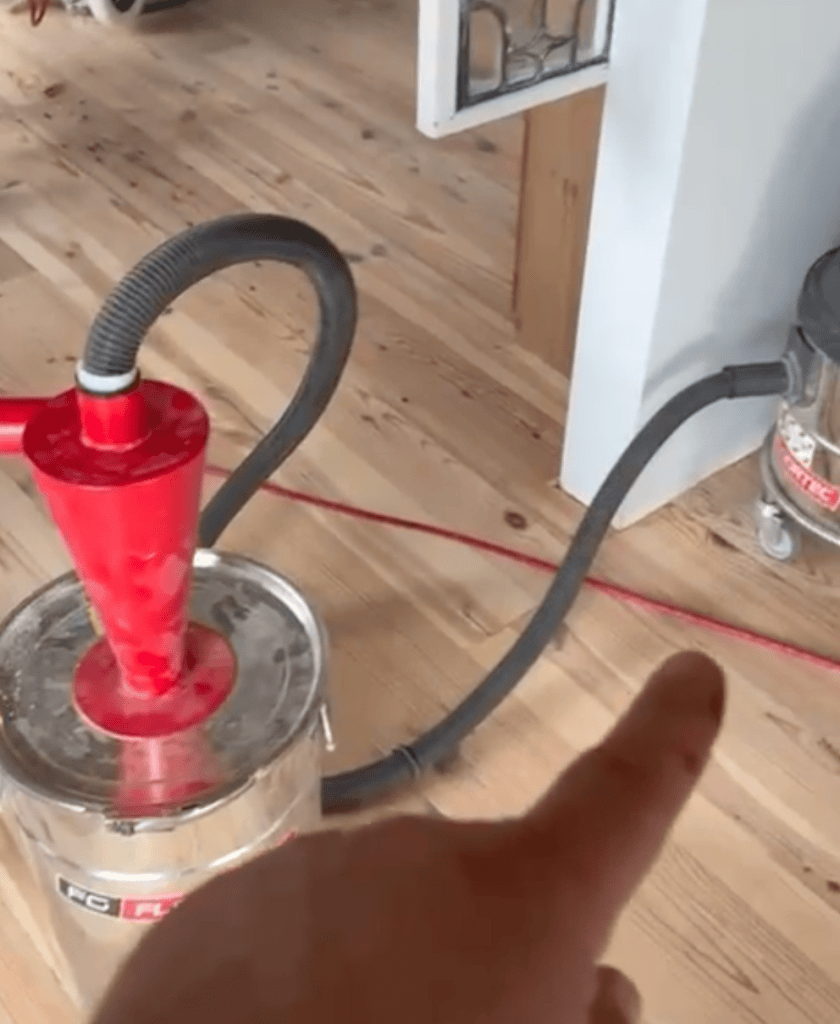
All sanding was dust-contained, with the machines running hose-connected to a cyclone separator over a collection drum, capturing dust at the machine.
Why Does Pine Stain Blotchy?
This floor received a wash coat of dewaxed shellac before any color went down: Zinsser SealCoat thinned with denatured alcohol at six parts alcohol to one part sealer.
Zinsser publishes SealCoat as a pre-stain conditioner for softwoods such as pine, thinned equal parts by volume with denatured alcohol. The six-to-one cut used here is Classy Flooring ATL’s working dilution for this job, considerably lighter than the published ratio.
The reasoning behind that lighter cut is our own, from work on pine floors: a wash coat this dilute partially evens out the porosity of the early wood while staying well below the point of building a film, so the stain that follows still penetrates and reads as color. A heavier cut sits closer to sealing the surface than to conditioning it.
Dewaxed shellac also carries a waterborne finish over the top cleanly. Wax in the shellac would interfere with the bond, which is why the dewaxed product is specified.
Sampling
Six stain samples went directly onto the sanded floor in bands, each separated by a strip of bare pine so every color could be read against raw wood.
Sampling on the floor itself gives an old pine floor its own answer. The samples sit in the room’s light, on the actual wood, at the grain and density of that specific floor — and in this house, in the same rooms as the original amber preserved under the refrigerator.
Color varies board to board within each sample. Old pine does this, because individual boards carry different density and grain, and that variation carries through into the finished floor as part of its character.
The homeowner selected from the six. She chose the warm ambered direction the floor had carried, with the color under the refrigerator serving as the reference for that direction.
The Stain
DuraSeal Quick Coat, custom blend — two parts Nutmeg to one part Chestnut.
DuraSeal Quick Coat is a semi-transparent oil-and-resin penetrating stain. DuraSeal publishes a minimum two-hour dry time before topcoating.
Blending two colors opened the range needed to land the tone the homeowner had selected. An orange-brown direction is the established approach for a heart pine floor being brought back toward an aged appearance, reading as the patina of a floor that has been down a long time.
The Finish System — Loba EasyPrime and 2K Duo
The clear finish build was one coat of Loba WS EasyPrime followed by two coats of Loba WS 2K Duo in satin.
Sealer — Loba WS EasyPrime, one coat. A waterborne polyurethane-acrylate sealer. Loba publishes roughly one hour drying by roller, a requirement to recoat with a Loba finish within 24 hours, and application with no intermediate sanding afterward.
Finish — Loba WS 2K Duo, satin, two coats. A two-component waterborne polyurethane, catalyzed at Loba’s published 10:1 base-to-hardener ratio, with a stated two-to-three-hour minimum recoat window. Satin sheen throughout.
The color on this floor lives in the stain, where the homeowner selected and approved it on her own wood. A clear finish over the top holds that color where it was set.
The Result
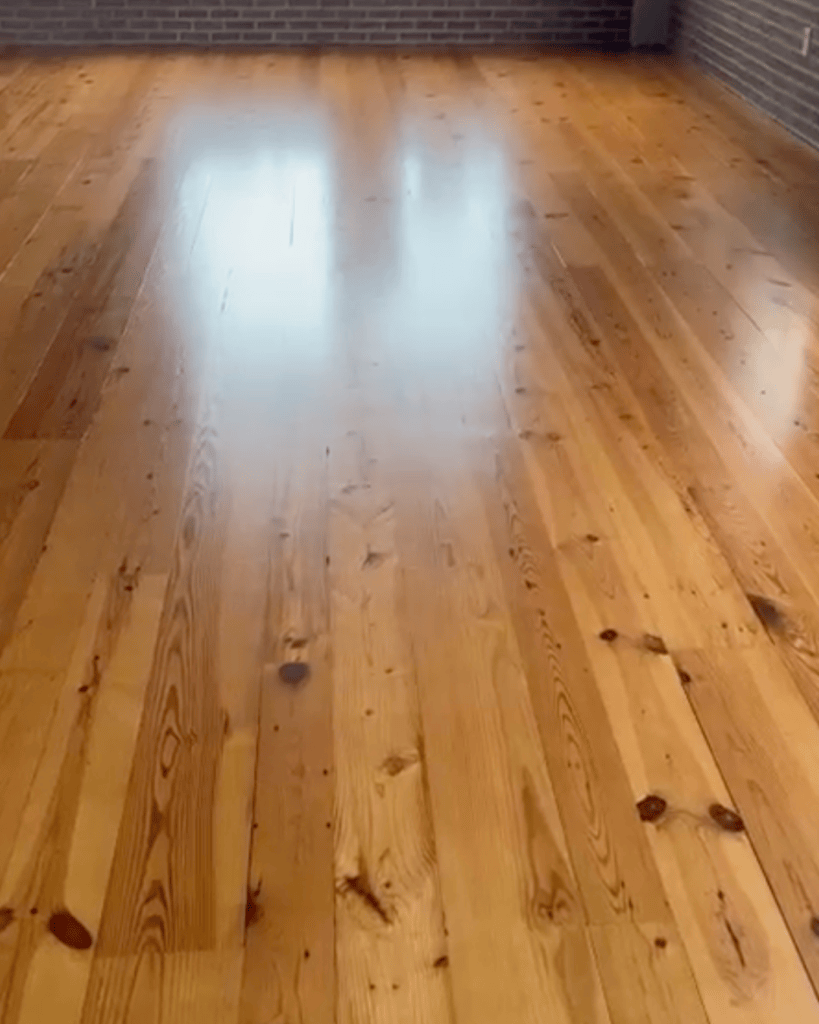
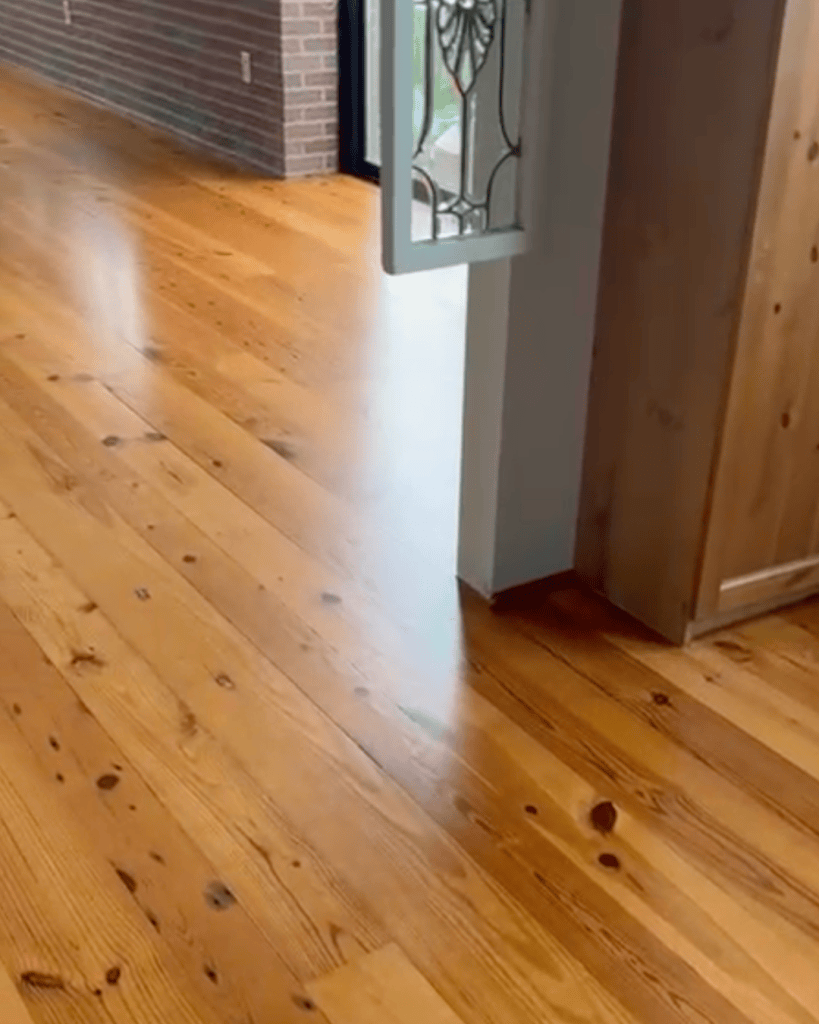
The finished floor is approximately 1,250 square feet of heart pine carrying the warm ambered tone the homeowner selected, with grain, knots, and old nail holes reading through the color.
The surface is flat. Photographed in the same raking light used to document the starting condition, reflections now run unbroken along the boards.
Client Review from This Project
Source: Google Business Profile review
“5 Star Review from Jason Finck
100-Year-Old Heart Pine Floor Refinishing — Roswell, GA
Claudiu Toma and the team at Classy Flooring ATL were absolutely brilliant! They took care of a custom refinish of 100 year old heart pine flooring in Roswell for me. There was nothing easy about this job. They implemented a dustless refinishing process, which included hepa vacs, to ensure that everything stayed clean throughout the process. They took their time to ensure a perfect, quality outcome, communication was second to none and their customer service was superior. I will continue to use Claudiu and the team from Classy Flooring ATL in the future. Job well done!”*
— Jason Finck
Ongoing Maintenance
The finish is a two-component waterborne polyurethane, maintained with cleaning products formulated for waterborne urethane finishes.
- Dry sweep or vacuum regularly to remove grit that causes surface wear
- Clean with a damp microfiber mop and a compatible waterborne-finish wood cleaner
- Place felt protectors under furniture legs and use area rugs at entry points
- Maintain indoor relative humidity between 35% and 55% year-round to limit seasonal movement
Loba publishes light traffic at 24 hours and full cure at five days for 2K Duo. Rugs and furniture go back once that full-cure period has passed.
Project Specifications
Species: Heart pine, existing — wide plank
Total area: Approximately 1,250 sq ft — two bedrooms, living room, kitchen, entry hallway
Building type: Condominium
Starting finish: Waterborne
Starting surface condition: Sanded unevenly during a previous refinish
Sanding sequence: 40, 60, 80 grit; then 100 and 120 planetary
Planetary sander: FG Floortec Discus
Dust control: Hose-connected cyclone separator and collection drum
Pre-stain treatment: Dewaxed shellac wash coat — 6 parts denatured alcohol to 1 part Zinsser SealCoat
Stain samples: Six, applied directly to the sanded floor
Stain: DuraSeal Quick Coat — 2 parts Nutmeg to 1 part Chestnut
Sealer: Loba WS EasyPrime, one coat
Finish: Loba WS 2K Duo, satin, two coats, catalyzed 10:1
Sheen: Satin
Full cure: 5 days per manufacturer
Crew: Two, Classy Flooring ATL in-house
Duration: Four working days
Project type: Refinishing
Location: Roswell, GA
Completed: November 2025
Completed by: Classy Flooring ATL
Client Review from This Project
Source: Google Business Profile review
“5 Star Review from Jason Finck
Project in Roswell, GA
Claudiu Toma and the team at Classy Flooring ATL were absolutely brilliant! They took care of a custom refinish of 100 year old heart pine flooring in Roswell for me. There was nothing easy about this job. They implemented a dustless refinishing process, which included hepa vacs, to ensure that everything stayed clean throughout the process. They took their time to ensure a perfect, quality outcome, communication was second to none and their customer service was superior. I will continue to use Claudiu and the team from Classy Flooring ATL in the future. Job well done!”
Frequently Asked Questions
Why did my pine floor lose its amber color after refinishing?
Sanding removed the aged finish and the darkened surface layer of the wood together, and a non-ambering finish held the pine at its raw color. The wood is sound and the color is recoverable. Getting it back means sanding to raw wood and building the tone through a stain.
Can the amber color be brought back to a pine floor?
Usually, and this floor is an example of it. The determining factors are how much sandable wood remains above the tongue, whether the boards are sound enough to take a full sanding, and whether the species will carry the tone being asked of it. Where those hold, the floor goes back to raw wood, a stain establishes the color, and a clear finish holds it. A color change always starts at the sanding stage, since stain needs raw wood to penetrate.
How do you find out what color a floor used to be?
Look for a section that was never exposed. Under a refrigerator, inside a closet, beneath a rug that never moved, behind a threshold or under trim — these hold the original. On this project the pine under the refrigerator had been shielded for the life of the floor. An old photograph gives a useful direction when no protected area exists, though lighting and camera processing shift the color it shows.
What stain color brings a heart pine floor back to an aged look?
A medium brown to orange-brown is the established direction, reading as patina rather than as applied color. Single off-the-shelf colors rarely land it, which is why blending is common. This floor took a blend of DuraSeal Quick Coat in Nutmeg and Chestnut at two to one, chosen by the homeowner from six samples on the floor.
How do you keep stain from going blotchy on pine?
Prepare the surface before color. A wash coat of dewaxed shellac, thinned heavily with denatured alcohol, partially seals pine’s porous early wood so stain absorbs at a more even rate across the board. The mix stays dilute enough to regulate absorption while leaving the wood open to take color.
Can an unevenly sanded floor be corrected?
Usually, and the correction happens at the sanding stage. The surface gets cut back and leveled, which suits a planetary sander: its heads rotate independently of the machine, crossing boards in all directions and levelling across the field. Available wood above the tongue sets the limit on how much correction a floor can take.
How do you tell if a wood floor is flat?
Get low and look down the run of the boards with light crossing them at a shallow angle, from a window or a work light set near the floor. A flat floor holds the reflection with a clean edge along its length. An uneven one scatters and breaks it. The same check works before and after sanding, and it shows what a straight-on photograph will not.
How long before furniture and rugs go back on a newly finished floor?
Go by the manufacturer’s published cure time, which runs considerably longer than the dry time. The finish on this floor reaches light traffic at 24 hours and full cure at five days, and rugs and furniture wait until that period has passed. Dry to the touch and cured are not the same thing, and putting a floor back into full use early is a common way a good finish gets damaged in its first week.
Related Work
For hardwood floor refinishing and restoration using professional finish systems, including color work and surface correction, see our Hardwood Floor Refinishing & Restoration service page. For a project matching a refinished floor to an existing floor of a different species, see our Hardwood Floor Color Matching project in Dunwoody. For a reclaimed heart pine restoration with wide gap filling, see our Reclaimed Heart Pine Restoration in Big Canoe.
If you have a pine or heart pine floor that came back the wrong color after refinishing, contact Classy Flooring ATL to have the floor evaluated. Classy Flooring ATL serves homeowners and builders in Atlanta, Buckhead, Sandy Springs, Brookhaven, Dunwoody, Roswell, Alpharetta, Johns Creek, Milton, and Braselton.