

A concrete floor is leveled for hardwood by measuring it with a straightedge, grinding the high spots, and filling the low areas with a self-leveling compound applied over a primer, once the slab has been moisture-tested. The target is flatness: for a glue-down floor, NWFA’s tolerance is 3/16 inch in 10 feet or 1/8 inch in 6 feet, unless the flooring manufacturer specifies otherwise. The tolerance measures the humps and dips a hardwood floor would show, so a slab can slope slightly and still meet it; our post on flat versus level subfloors covers the difference. Herringbone is held to the same tolerance, as our post on how flat the subfloor needs to be for herringbone explains.
On Classy Flooring ATL’s slab installations, the sequence is moisture readings, grinding, and two coats of WAKOL PU 280 as the moisture barrier. Where the slab is still out of tolerance, WAKOL D 3045 primer is applied on the cured PU 280 and WAKOL Z 631 self-leveling compound is poured over the primer, and the hardwood is glued to the cured compound. The order and the wait times come from WAKOL’s data sheet for each product.
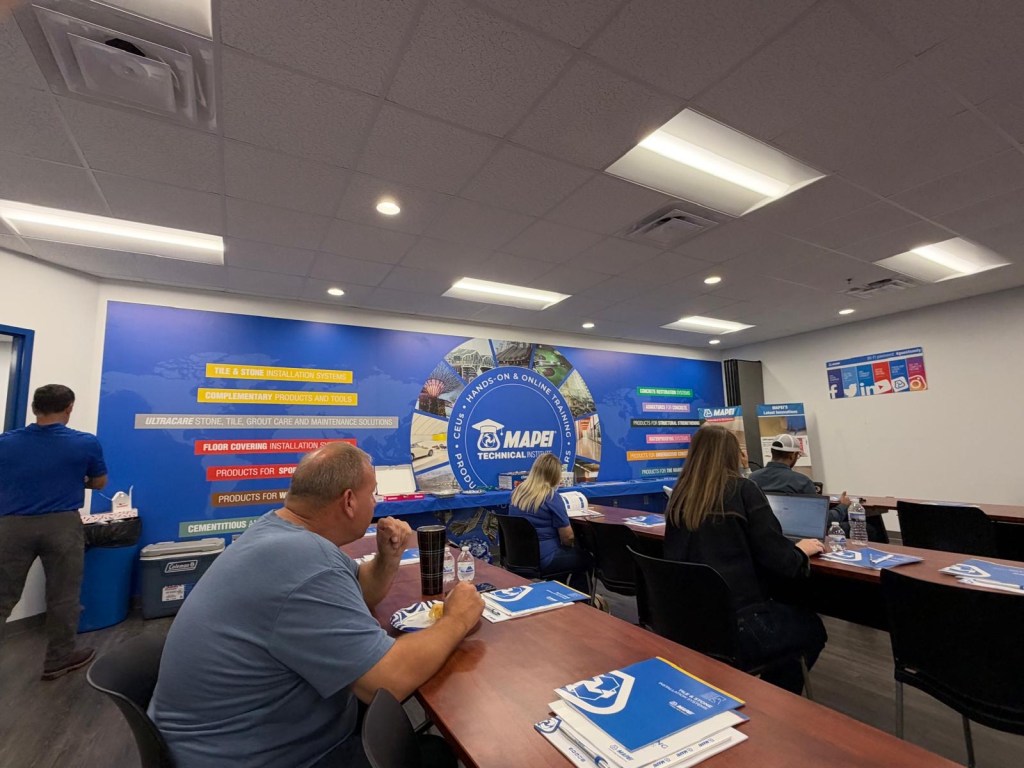
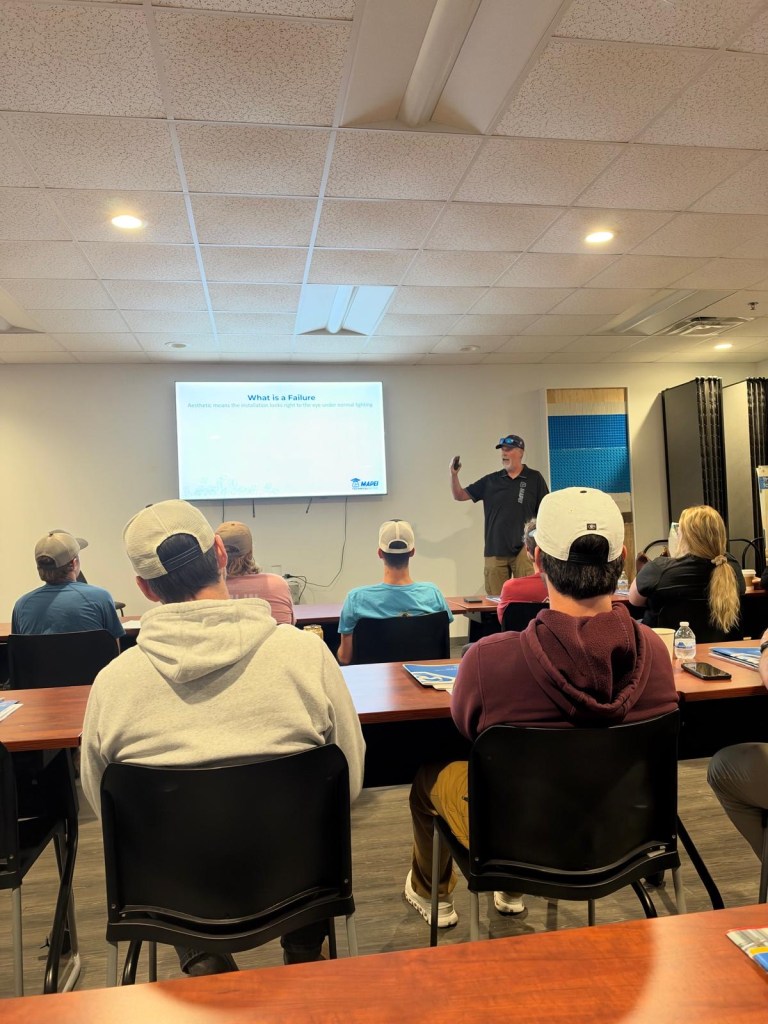
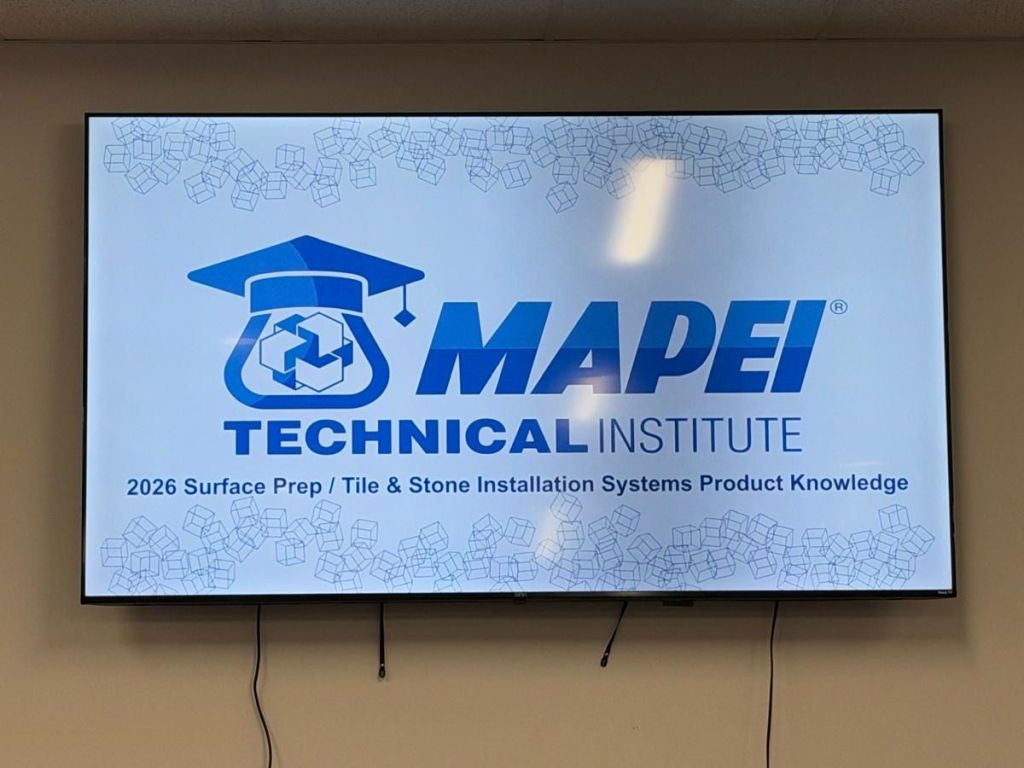
Surface preparation and self-leveling were the focus of the MAPEI Technical Institute class Claudiu Toma of Classy Flooring ATL attended on November 5, 2026, at MAPEI’s plant in Calhoun, Georgia. The class combined MAPEI’s Floor Covering Installation Systems and Tile & Stone Installation Systems courses and covered MAPEI’s own products. On Classy’s slabs the leveling system is WAKOL’s, so the answers below follow WAKOL’s data sheets, NWFA’s installation guidelines and the jobs where Classy used them.
When should you not use self-leveling concrete?
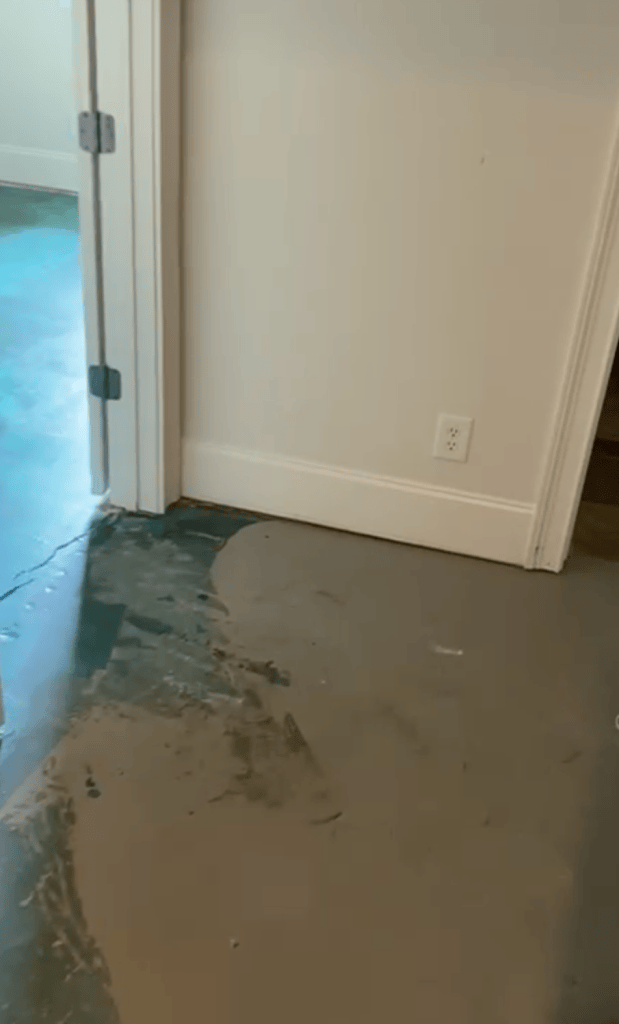
Self-leveling compound is for a slab with low areas outside the flatness tolerance, and it is poured after the slab has been moisture-tested and sealed. When a slab already measures within tolerance, or grinding its high spots brings it there, Classy Flooring ATL glues the hardwood directly to the cured moisture barrier. WAKOL’s data sheets rule out both PU 280 and Z 631 on a slab under hydrostatic pressure, where groundwater pushes up through the concrete.
Leveling adds a primer, a pour and a 24-hour wait before installation, so it is used only where the measurements call for it. In a new home in Monroe, the slab measured within NWFA’s tolerance and needed no self-leveler: it was ground so the WAKOL PU 280 could penetrate, tested at 65% relative humidity with in-slab probes, and sealed with two coats of PU 280, and the prefinished engineered white oak and its herringbone dining room were glued in WAKOL MS 260.
The slab is tested for moisture before any leveling. NWFA’s guidelines call for letting a slab dry further or installing a Class I vapor retarder, per the adhesive manufacturer, when it tests above 80% relative humidity with in-slab probes or above 3 lbs per 1,000 sq ft per 24 hours with calcium chloride. Under a glue-down, NWFA has the adhesive manufacturer set the moisture limits and the moisture control, and the retarder has to be compatible with the adhesive. Classy Flooring ATL applies two coats of WAKOL PU 280, which WAKOL rates to 98% relative humidity; above that, WAKOL evaluates the slab first. WAKOL limits Z 631 on bare concrete to the same 80% and 3 lbs, and above them it requires PU 280 or WAKOL MS 330 underneath. Our post on hardwood over a concrete slab covers how slabs are tested and sealed in Atlanta.
The compound also has to be mixed and handled to its data sheet: 5 quarts of water per 50-lb bag, since extra water weakens it, then poured, spread with a gauge rake and smoothed immediately.
Is there an alternative to self-leveling concrete?
Yes. Grinding is the main alternative: a slab that is out of tolerance because of high spots is ground at those spots until it measures within tolerance. Grinding removes concrete where the slab is high, and self-leveling compound adds material where it is low; NWFA’s guidelines name both, grinding high areas and filling low areas with compatible, primed patches or self-levelers.
The least expensive correction is usually the smallest one. A few high spots are ground, a small low spot can be filled with a compatible, primed patching compound, and self-leveler is poured where a whole area sits low, since grinding around a broad dip would mean lowering the rest of the slab to meet it. Subfloor correction is priced according to the condition of the subfloor, $1.00 to $4.00 per square foot; self-leveling compound, where the floor needs it, is $110 per bag, material and labor included. Our page on subfloor preparation covers how we prepare concrete slabs and plywood subfloors for hardwood, and how that work is priced.
On the main level of a two-house estate in Woodstock, the high spots were ground down and the slab was checked against NWFA’s tolerance, because a 9-1/2-inch plank telegraphs any deviation in the slab beneath it. Grinding brought the slab within tolerance, so no self-leveling compound was required, and two coats of WAKOL PU 280 were applied across it as the moisture barrier.

Can I pour self-leveling concrete over existing concrete?
Yes, once the concrete is clean, sound and primed. Classy Flooring ATL pours WAKOL Z 631 over existing slabs after grinding them and sealing them with two coats of WAKOL PU 280, with a coat of WAKOL D 3045 primer between the PU 280 and the compound.
WAKOL’s data sheet for Z 631 requires the concrete to be clean and free of dust, oil, grease, paint, wax and old adhesive, with curing compounds, sealers and loose toppings removed mechanically, which is the work grinding does. WAKOL specifies a primer under Z 631 on both absorbent and non-absorbent concrete, chosen by the surface it is applied to: WAKOL D 3003 or D 3004 on absorbent concrete, D 3045 or D 3004 on a non-absorbent surface. Two coats of PU 280 leave the slab non-absorbent, so D 3045 is applied over them. The PU 280 data sheet sets the timing: the D 3045 is applied within 24 hours after the PU 280 has cured and dries for about an hour before the Z 631 is poured.
In a Chateau Elan home in Braselton, the existing glue-down floor was removed and the concrete was ground to remove the adhesive residue. The slab tested at 55 to 65 percent relative humidity with an in-slab probe and received two coats of WAKOL PU 280, WAKOL D 3045 primer, and WAKOL Z 631 where needed to bring it within tolerance for 7-inch engineered white oak, glued in WAKOL MS 260.
How thick can self-leveling floor compound be?
WAKOL Z 631, the self-leveling compound Classy Flooring ATL uses, is installed from a minimum of 1/8 inch up to 2 inches, the maximum WAKOL gives for most applications. WAKOL requires a mat test (ASTM D4263) before flooring is installed over any pour deeper than 3/8 inch, because a deeper pour holds more mix water to dry out.
One 50-lb bag covers about 50 square feet at 1/8 inch. The coverage falls in proportion as the pour gets deeper: at 1/4 inch, the same bag covers about 25 square feet.
Over plywood, the requirements change. WAKOL approves Z 631 over plywood at least 3/4 inch thick, screwed down and free of deflection, on joists 16 inches on center, and NWFA notes that self-levelers are not normally approved over wood panels and cannot be nailed through. Our guide to what kind of subfloor hardwood floors need covers leveling a wood subfloor.
How long does self-leveling cement take to dry?
WAKOL Z 631 can be walked on in 2 to 3 hours, and floor coverings are installed after 24 hours for pours up to 3/8 inch; deeper pours are mat-tested first.
At 2 to 3 hours the compound has set hard enough to walk on; the 24 hours give the mix water time to leave before the adhesive is spread and the wood is installed over it. The mixed compound sets fast: it stays workable for about 15 minutes.
Those times are based on the jobsite conditions WAKOL sets for Z 631: 60 to 75°F and 40 to 75% relative humidity, with the doors and windows installed and the HVAC running.
Planning a hardwood installation over a concrete slab in metro Atlanta or North Georgia? Contact Classy Flooring ATL.
Classy Flooring ATL is led by Claudiu Toma, an NWFA Certified Installer, NWFA Certified Sand & Finisher and NWFA Certified Sales Advisor, who completed NWFA Precision Patterns: Parquet Flooring and NWFA Precision Patterns: Medallions. Every project is carried out by our in-house crew.