Oak Wall Paneling Refinishing in Rubio Monocoat Linen — Buckhead Residence by Classy Flooring ATL, January 2026
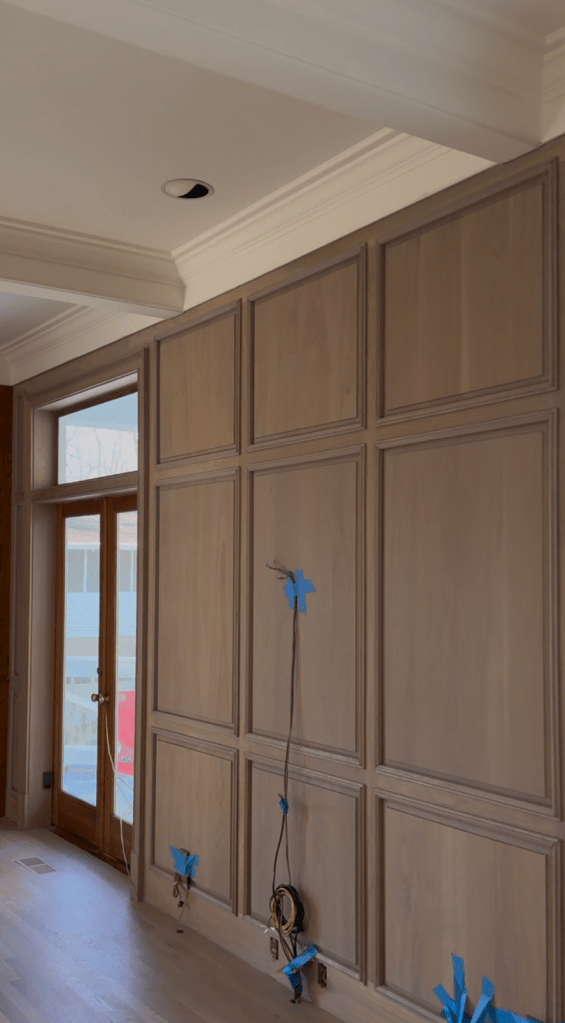
Classy Flooring ATL completed a full-room refinishing of an existing solid oak raised-panel millwork system in a private Buckhead, Atlanta home, finished in Rubio Monocoat Oil Plus 2C, Linen, followed by Rubio Monocoat Universal Maintenance Oil. The original paneling, paneled doors, fireplace surround, and bar millwork were preserved in place and refinished rather than replaced.
Project specifications
- Location: Buckhead, Atlanta, Georgia
- Completed: January 2026
- Work type: Refinishing of existing solid oak millwork — no replacement
- Scope: Full-height wall paneling, paneled interior doors, paneled fireplace surround, bar millwork
- Finish system: Rubio Monocoat Oil Plus 2C (color: Linen) with Rubio Monocoat Universal Maintenance Oil
- Scale: 153 raised panels, each framed by 4 trim pieces — 612 individual trim elements
- Duration on site: 3 weeks
- Crew: 4-person Classy Flooring ATL team
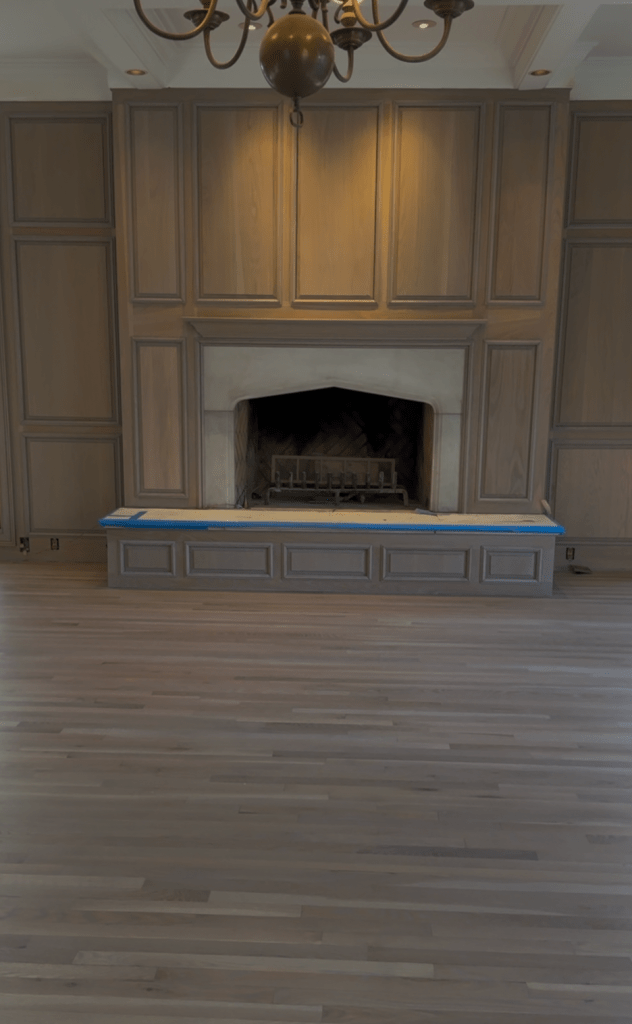
Starting condition
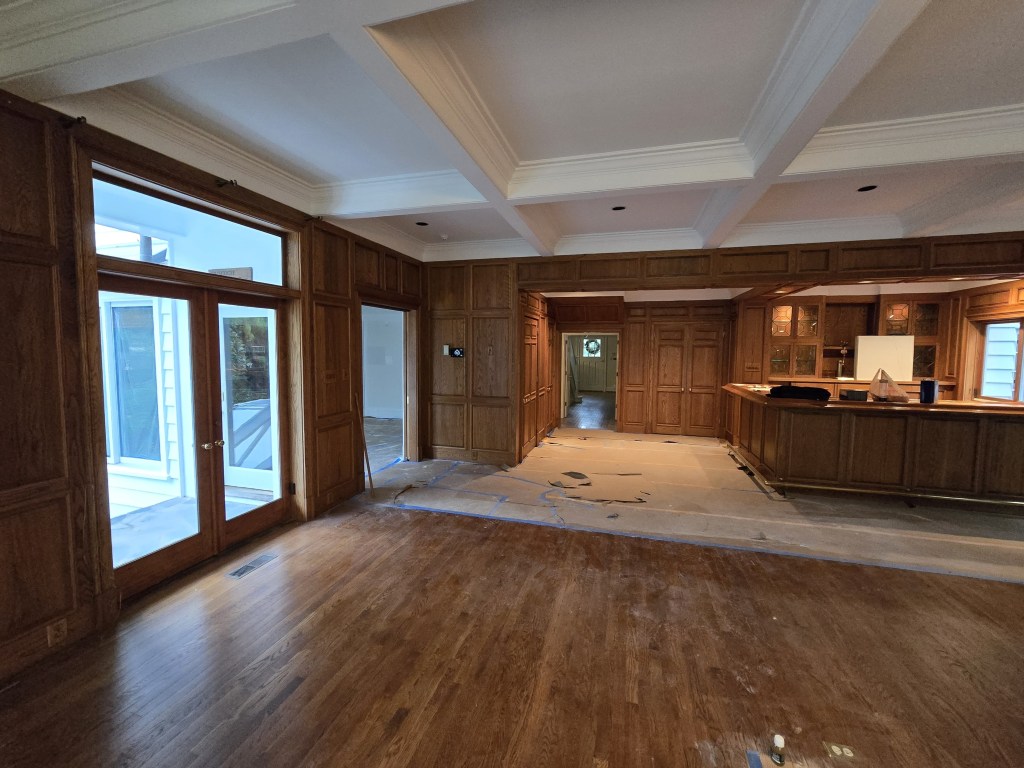
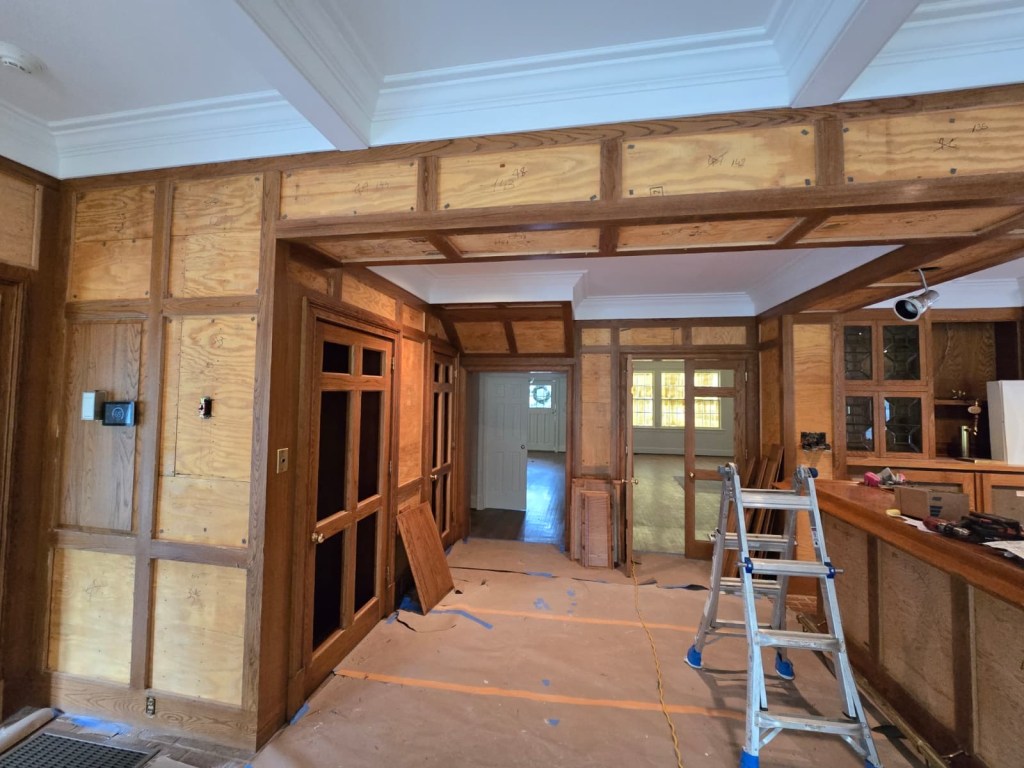
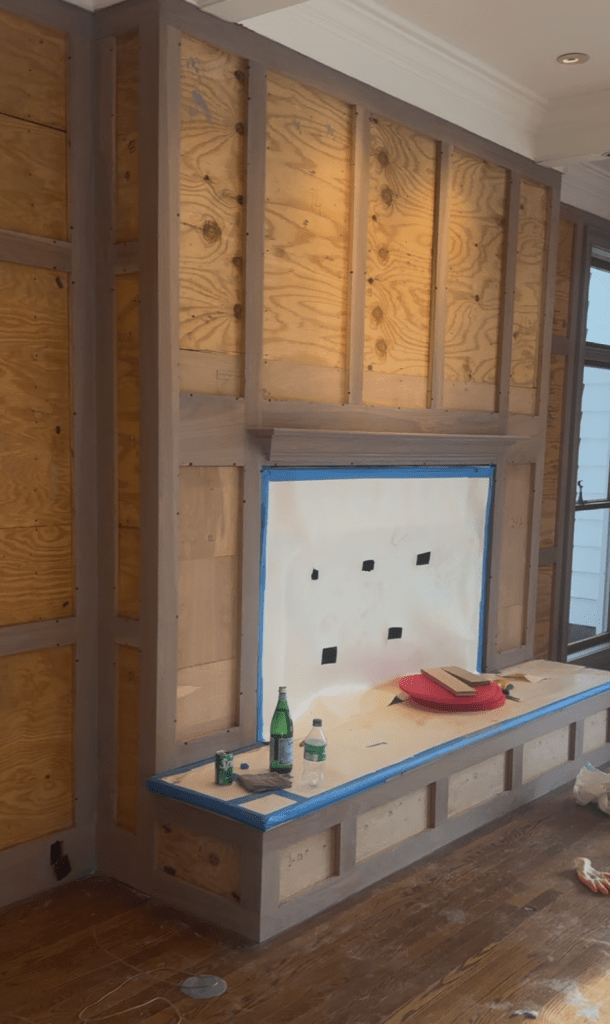
The existing millwork was solid oak raised paneling with a warm, orange-toned finish and a visible sheen. The overall appearance read as traditional. The paneling wrapped the great room continuously: wall panels floor to ceiling, paneled interior doors integrated into the wall grid, the fireplace surround with its upper panel stack and panel-wrapped beams and soffit, the panel-faced bench enclosure below the firebox, and the bar millwork. The limestone fireplace mantel and the existing chandelier remained in place throughout.


Design direction
The project direction was to move the space toward a more modern, natural, and contemporary appearance. The orange undertone had to be removed. Original trim profiles and millwork geometry were to be preserved — not replaced, not modified. The refinish had to change the color without altering the architecture.
Why refinish rather than replace
Replacing this millwork would have required dismantling and rebuilding a full-room paneled system, including custom matching of profiles across 153 panels and their trim. Refinishing preserved the existing millwork, kept the architectural geometry intact, and enabled a complete color change.
Scope of refinishing — Buckhead residence
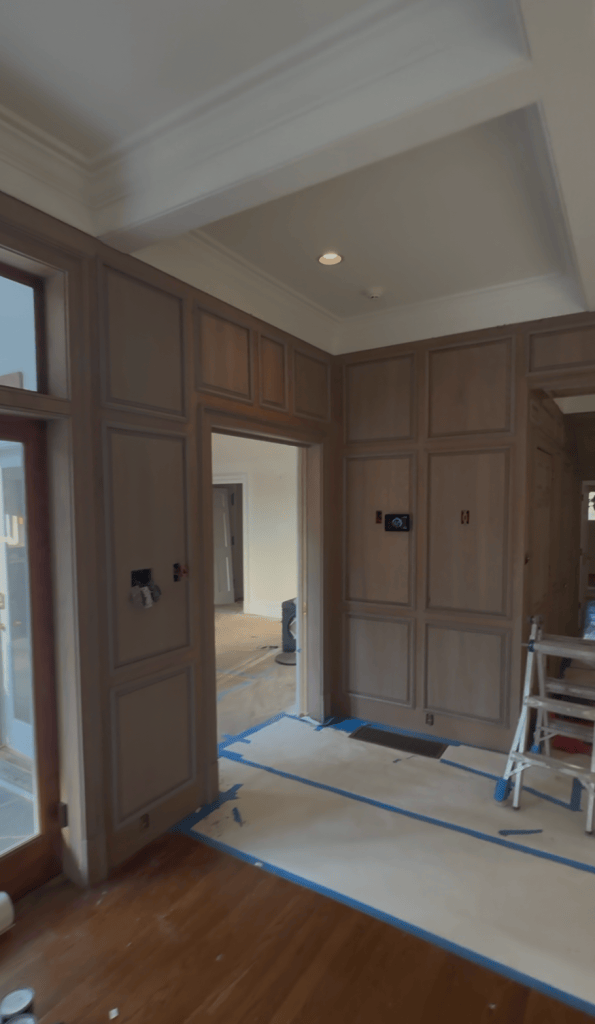
- Full-height solid oak wall paneling across the great room
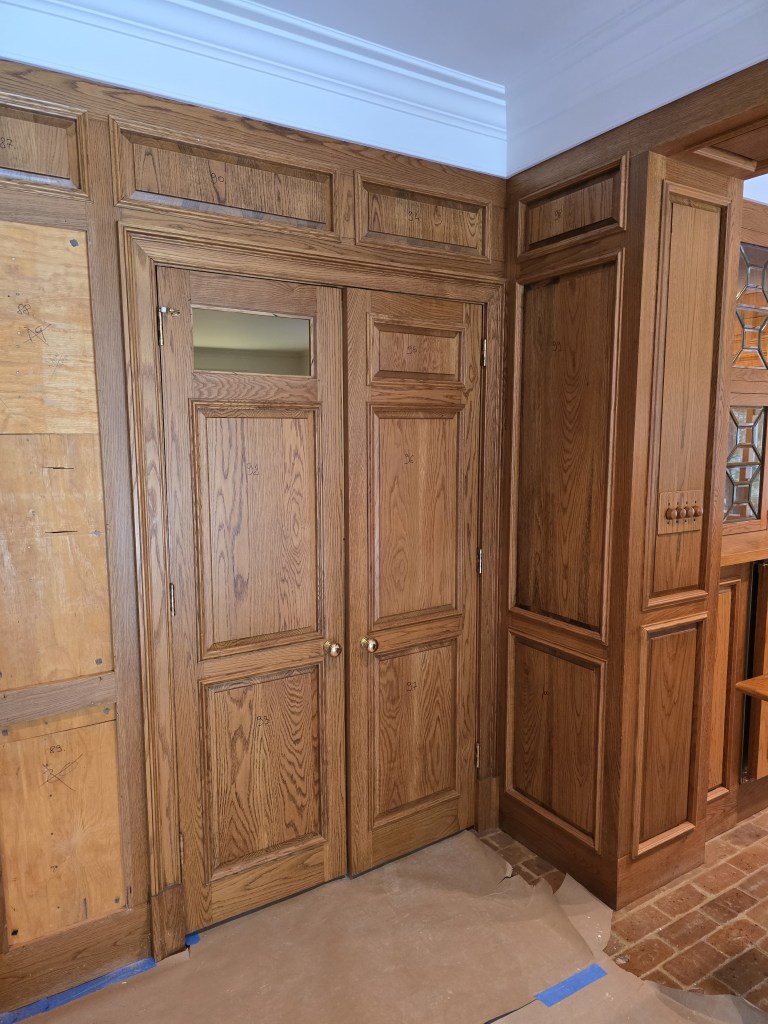
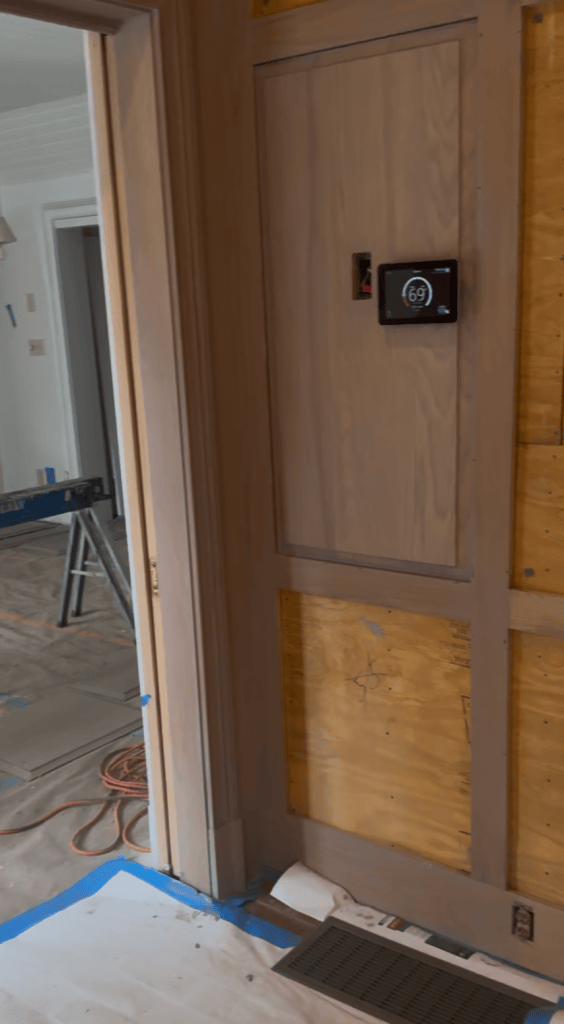
- Paneled interior doors, including concealed door panels integrated into the wall grid
- Fireplace surround — upper panel stack, panel-wrapped beams and soffit, and panel-faced bench enclosure
- Bar millwork
Not in scope on this page: the coffered ceiling and crown moulding are painted drywall and painted trim, completed by other trades. The hardwood floors were part of the same project but are documented separately.
Technical challenge
Three factors defined the difficulty of this project:
- Scale. 153 panels, each framed by 4 trim pieces, produced 612 individual trim elements that had to be prepared and finished to a uniform standard.
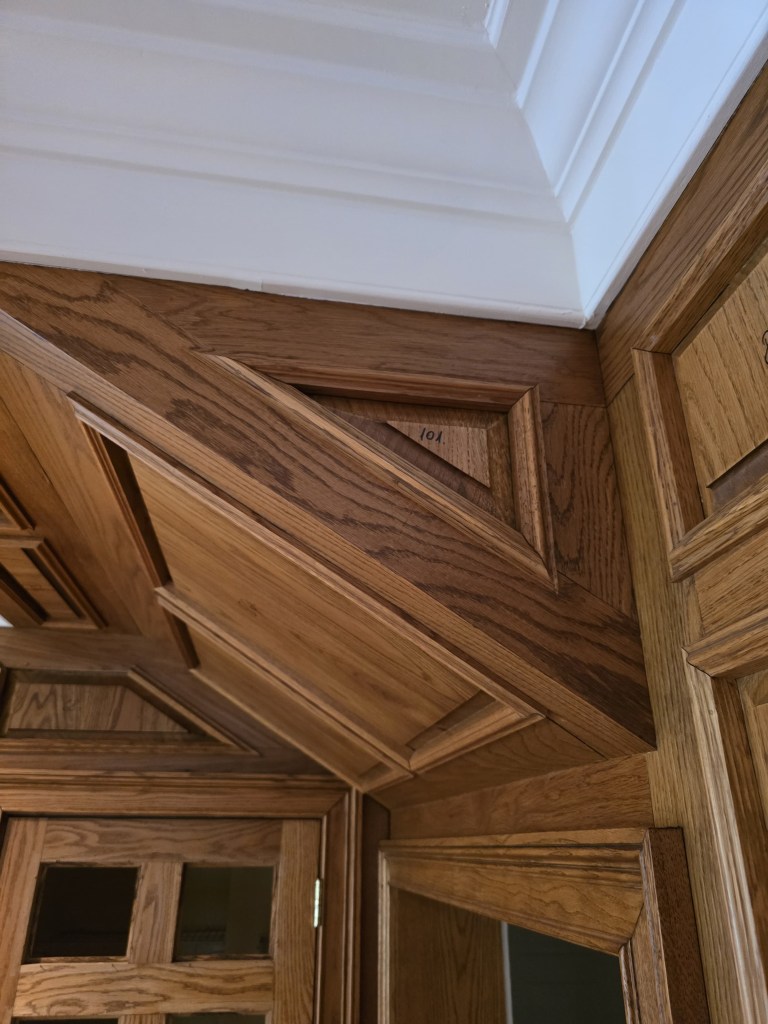
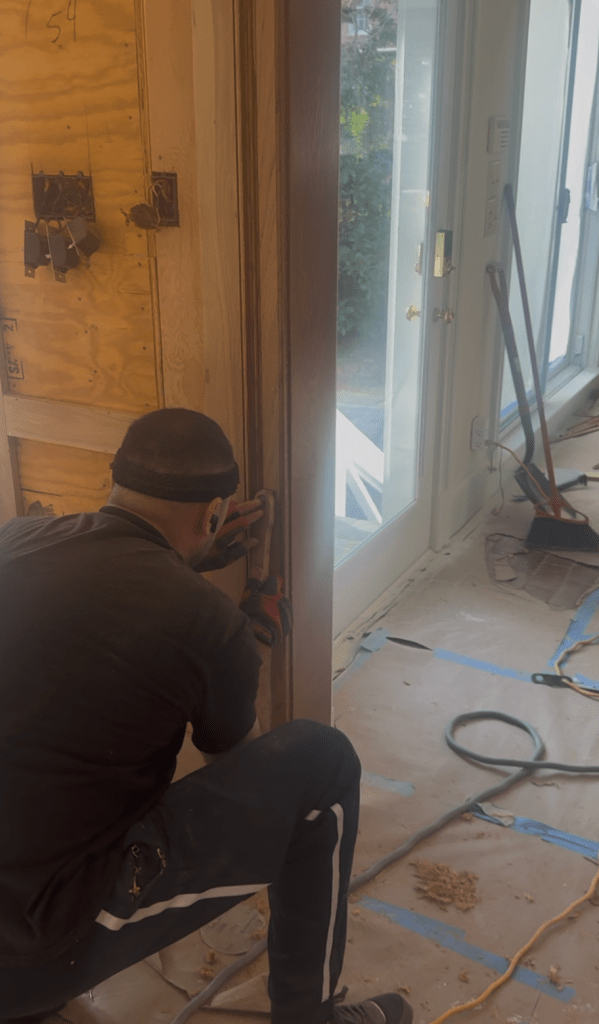
- Profile preservation. Every trim element had to retain its original profile. The geometry prevented full reliance on powered sanders, so the profile work was completed by hand — card scrapers on the profile faces, sanding sponges on the returns, and sanding blocks for the channels. Wire brushes were used to clean inside corners and profile valleys where sandpaper could not reach.
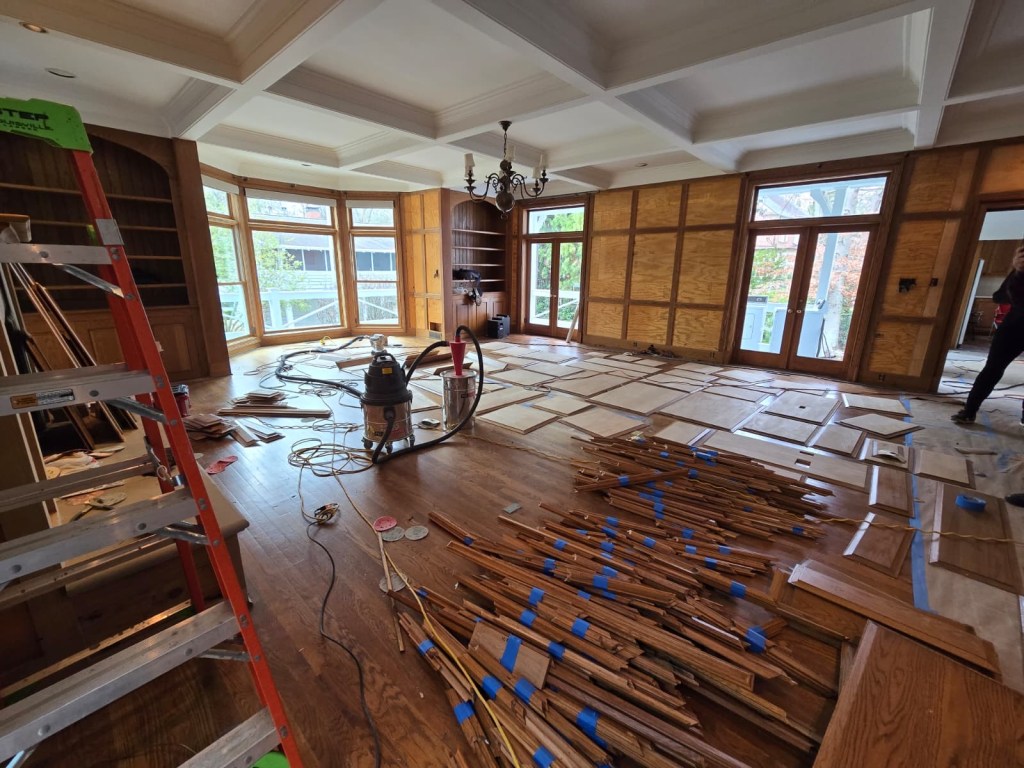
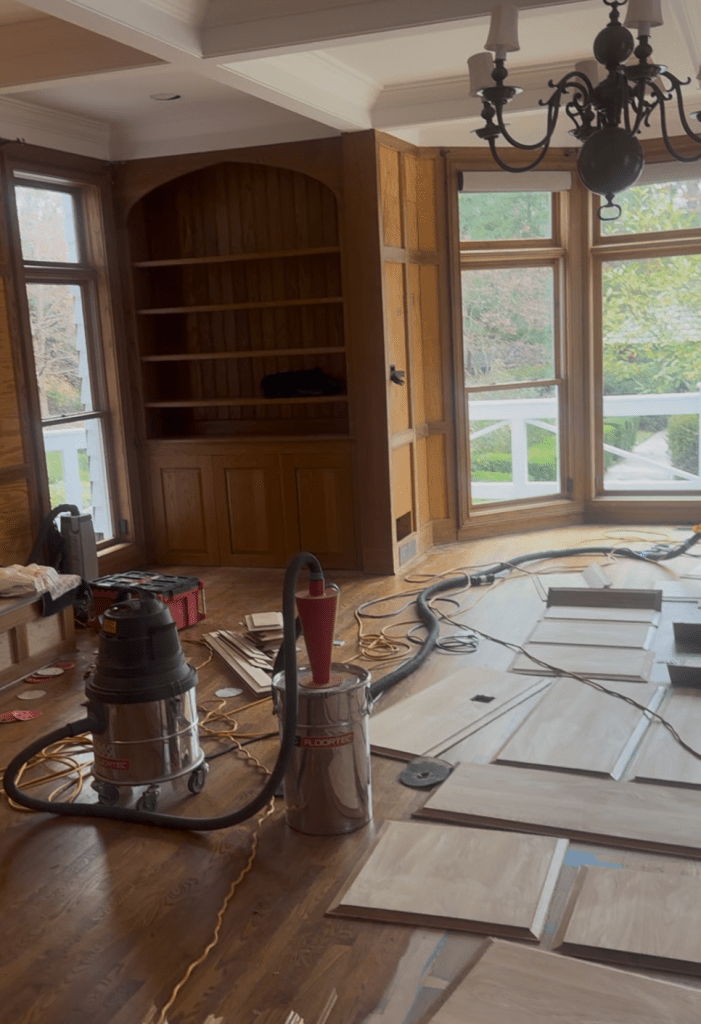
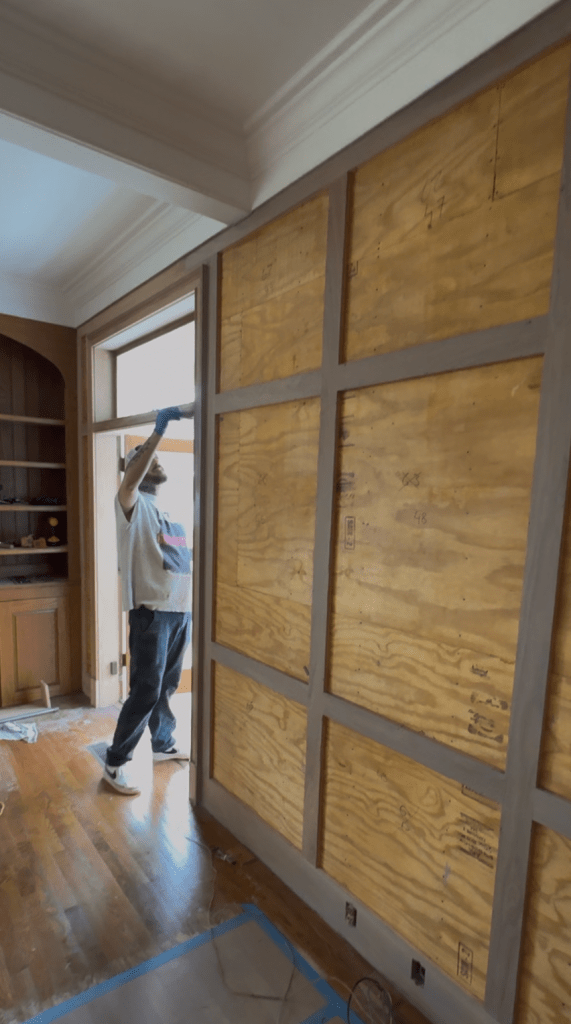
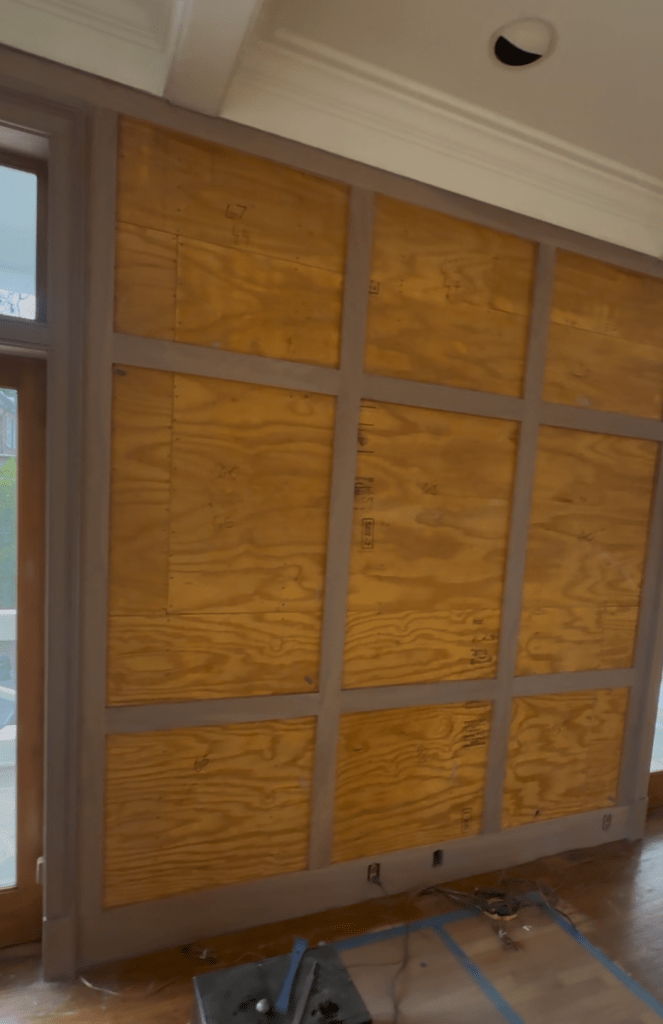
- Dual-method coordination. Removable panels and trim pieces were taken off the wall and worked on sawhorses. Fixed frames that could not be removed were sanded and finished in place on the wall. The finished result had to read as a single uniform surface across both categories — no visible difference in tone, sheen, or texture between components that came off the wall and components that stayed on it.


Process followed by Classy Flooring ATL
The full sequence followed Rubio Monocoat’s published application protocol for Oil Plus 2C on vertical surfaces, with Universal Maintenance Oil applied as the second-stage finish.
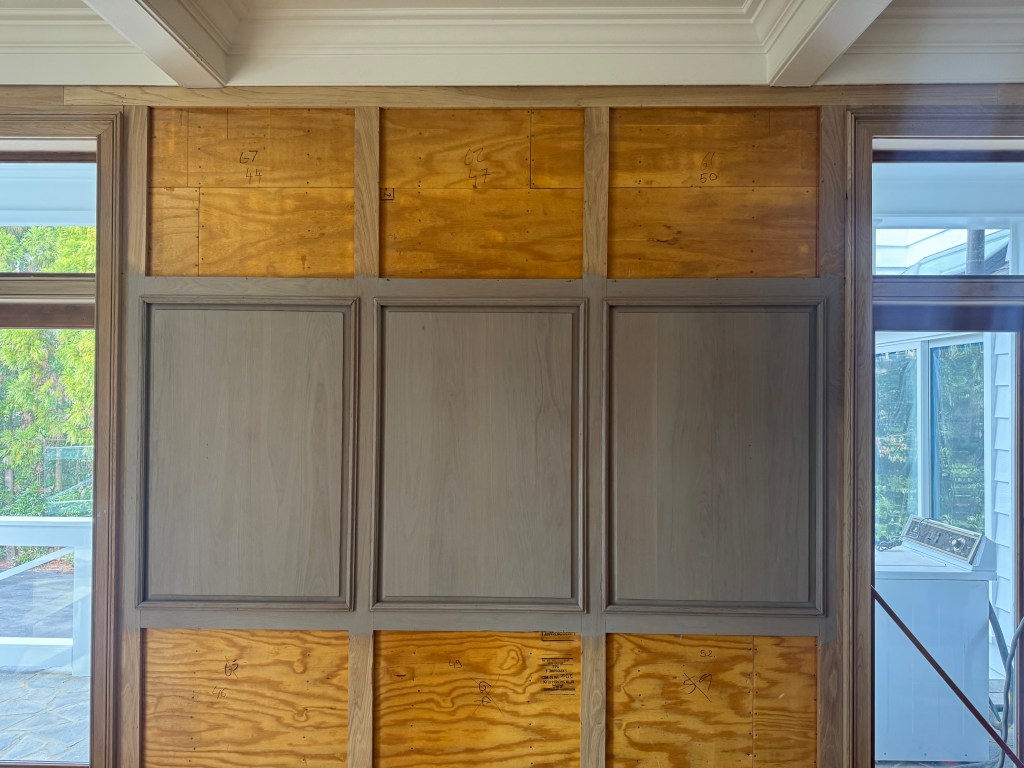
- Survey and numbering. Every removable panel and trim piece was numbered on the back before removal so each component could be returned to its original position during reassembly.
- Removal. Panels and trim pieces were taken off the wall wherever removal was possible.
- Sanding. Sanding was performed in three grit stages — 80, 100, then 120 grit. Removable components were sanded on sawhorses with palm sanders and hand tools. Fixed frames that remained on the wall were sanded in place with the same tool set.
- Dust extraction. Backpack vacuums and HEPA vacuums were used throughout as separate units to manage airborne dust during sanding.
- Raw Wood Cleaner. After sanding and vacuuming, every surface was cleaned with Rubio Monocoat Raw Wood Cleaner to lift the finest dust particles electrostatically. Surfaces were allowed to fully dry before proceeding.
- Water popping. To intensify color development of the Linen pigment, the sanded and cleaned surface was wiped with a water-dampened cloth to open the grain. Surfaces were allowed to dry fully before finish application.
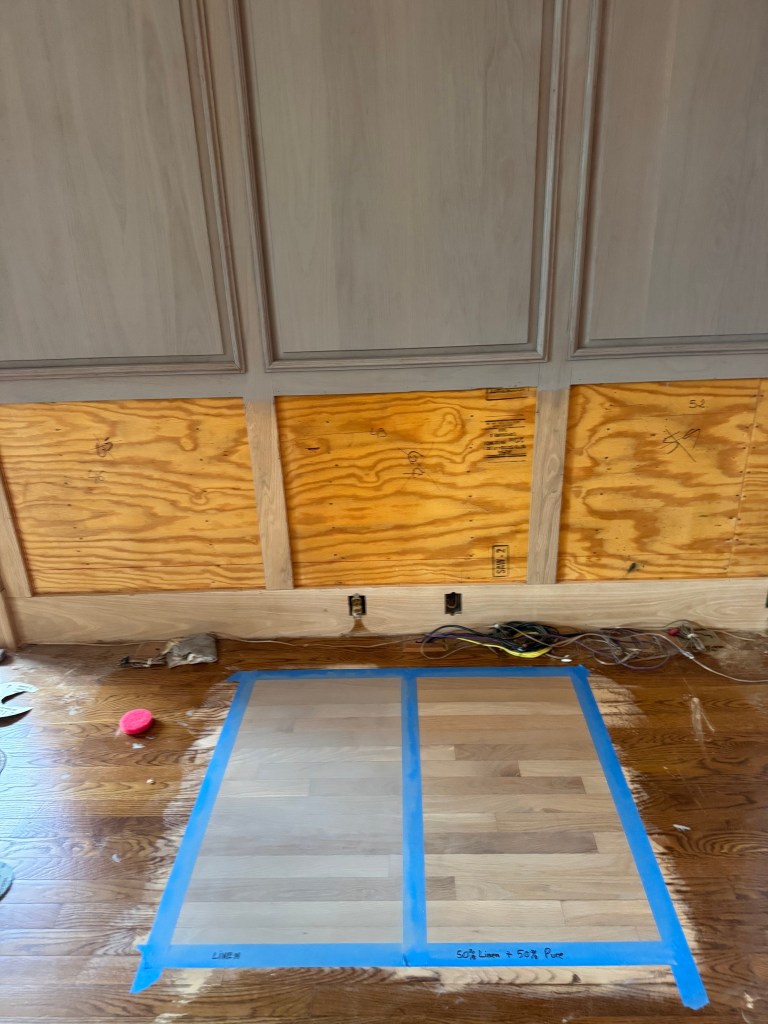
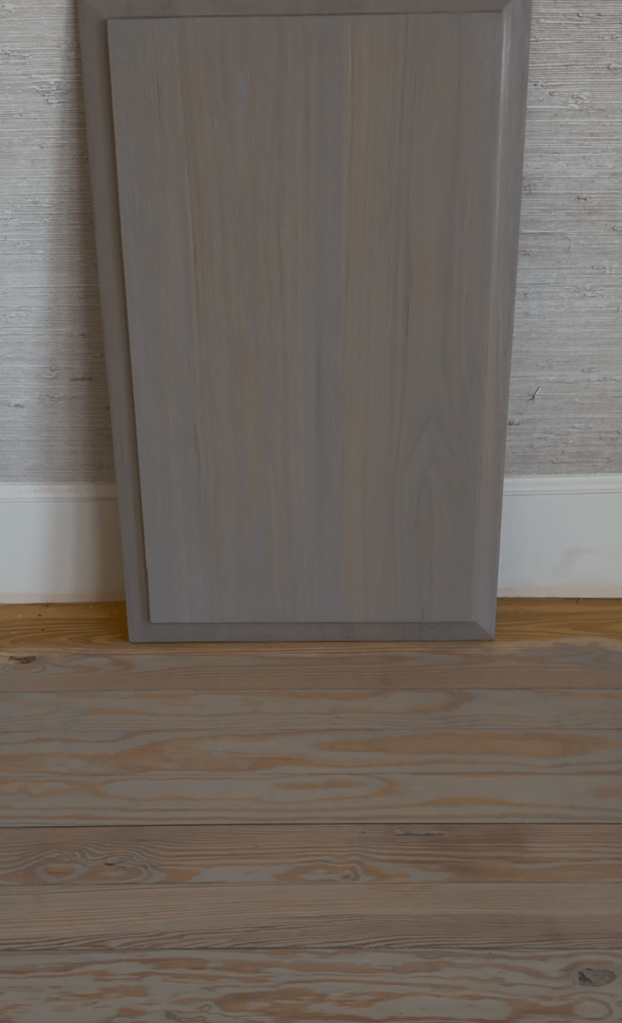
- Sampling. Three gray/greige shades of Rubio Monocoat Oil Plus 2C were applied to three full raised panels and installed side-by-side in the paneled wall for in-context review under the home’s actual lighting.
- Mixing — Oil Plus 2C. Components A and B were mixed at the manufacturer-specified 3:1 ratio (3 parts A to 1 part B) for 1 to 2 minutes. Once mixed, the oil has a 4 to 6 hour working window, so only the quantity needed for the active zone was mixed at a time.
- Application — Oil Plus 2C. The oil was applied by brush and spread with a red Rubio Monocoat Scrubby pad, working in zones sized to stay within the manufacturer’s reaction-time window.
- Reaction and excess removal. Per Rubio Monocoat specification, the oil was allowed to react with the wood for a minimum of 5 minutes and excess was buffed off with a clean white Rubio Monocoat pad inside the 15 to 30 minute working window. After all zones were completed, the surface was passed again with a new clean white pad to confirm a non-sticky, fully-wiped result.
- Cure interval. The surface was allowed to cure for 72 hours before the second product was applied. Rubio Monocoat’s published minimum is 48 hours.
- Application — Universal Maintenance Oil. Universal Maintenance Oil was stirred to a homogeneous mixture, applied by brush, and spread with a red Scrubby pad using the same vertical-surface method.
- Excess removal and non-stick pass — Universal Maintenance Oil. Excess was buffed off each zone with a clean white pad within the 15-minute working window. A final pass with a new clean white pad was made across all zones to confirm the surface was non-sticky.
- Reassembly. Each numbered panel and trim piece was returned to its original location.


Finish specification
- Base coat: Rubio Monocoat Oil Plus 2C in Linen. A single-coat hardwax oil that colors and protects wood through molecular bonding in one application. Mixed 3:1 (Part A oil to Part B accelerator).
- Secondary coat: Rubio Monocoat Universal Maintenance Oil, applied after 72 hours of cure to raise the sheen from matte to velvet and nourish the wood.
- Why Linen: Delivered the cool, natural, non-orange appearance the project required while keeping the oak grain visible rather than covered.
Sampling and color selection
Three Rubio Monocoat shades were prepared as full-panel samples and installed side-by-side in the paneled wall for review in context. The differences between the three were deliberately subtle — all within the gray/greige range — so the selection could be made against the room’s real conditions: daylight, interior lighting, the adjacent limestone mantel, and the surrounding architecture. Linen was selected as the specification for the full scope.
Ongoing maintenance
- Cleaning: Rubio Monocoat Universal Soap or Surface Care Spray, sparingly.
- Sheen maintenance: Re-apply Universal Maintenance Oil when the surface begins to dull.
- Color refresh: Re-apply Oil Plus 2C in Linen if color wear develops over time.
What this Buckhead project demonstrates
- Architectural solid oak paneling refinishing at full-room scale, completed by Classy Flooring ATL in Buckhead, Atlanta
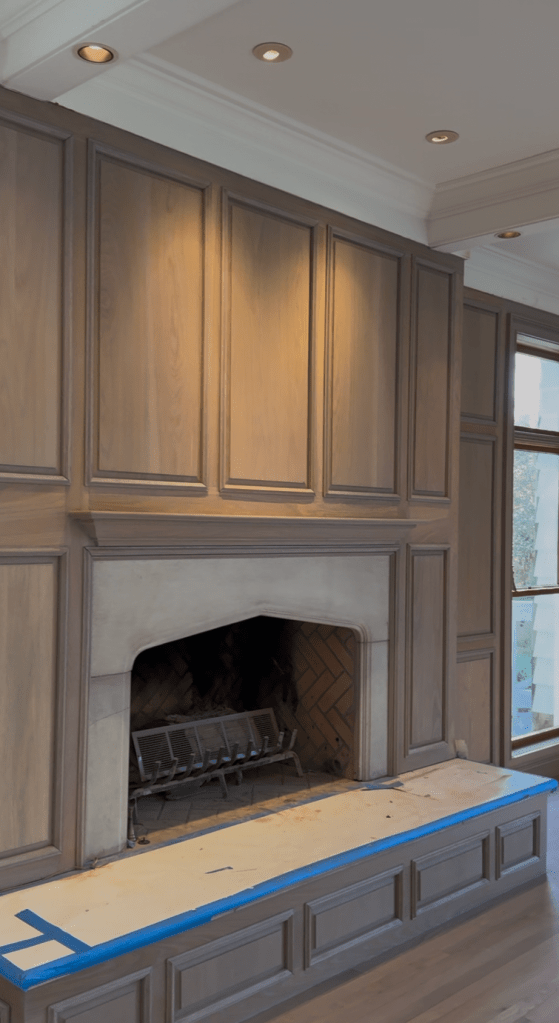
- Coordinated finishing across removable and fixed millwork components, executed to a uniform visual standard
- Preservation of original trim profiles through hand-scraping, wire-brushing of inside corners, and sanding-block work in channels — no replacement of any original element
- Full Rubio Monocoat two-product system execution to manufacturer specification: surface preparation with Raw Wood Cleaner, 3:1 A-to-B mixing, vertical-surface application, and Universal Maintenance Oil applied after cure
- Sample-based color selection reviewed in-context before full application
- Rubio Monocoat Oil Plus 2C application at interior architectural scale in Buckhead, Atlanta